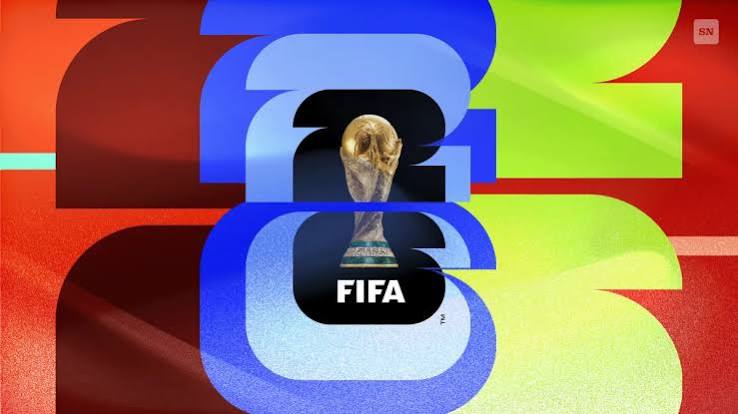
July 17 – Lionel Messi’s Argentina and Spain will headline Sunday’s blockbuster World Cup final, accompanied by US President Donald Trump and a drawn-out half-time show.
After more than 100 matches and 46 teams that have fallen by the wayside, the South American champions and title holders will take on the European champions – a first in a World Cup final – to decide who reigns supreme in the global game. Can Messi defy logic at the age of 39 and shape football history?
Argentina have the opportunity to become the first team since Brazil with the legendary Pele and Garrincha in 1962 to defend their World Cup title. But they will have to overcome a formidable Spain.
The European champions went under the radar after a disappointing draw against Cape Verde. Yet, Luis de la Fuente’s side steadily rebuilt their momentum, conceding their first and only goal of the tournament to date during a tense 2-1 quarterfinal victory over a rejuvenating Belgium.
In the last four, they emphatically dispatched France 2-0. They outplayed the French in midfield and demonstrated some of Spain’s finest qualities – technical and tactical finesse.
The Spanish might lack the directness that an injured Nico Williams provides, and Lamine Yamal is yet to fully explode at this tournament, but victory would further cement their reputation as football’s dominant nation.
In contrast, Argentina’s road to New Jersey has been much rockier despite having had considerably less travel and a very favourable early draw. Their progression has been marked by glorious comebacks and a strong resilience.
The pathway to the final should have been straightforward but it wasn’t for a team that’s much slower than four years ago but relies on largely the same personnel. They were almost embarrassed by Cape Verde and rode their luck against Egypt – a game that was steeped in controversial refereeing decisions.
Argentina also benefitted from a remarkable red card (second yellow) handed to Breel Embolo of Switzerland. The Swiss had looked like taking Argentina all the way to penalties.
Even against England, in the last four, Argentina trailed until the 85th minute before they engineered a spectacular comeback to book a ticket to their second consecutive World Cup final. Their voodoo certainly worked on England’s German coach in the last half hour.
Lionel Messi is the team’s lifeblood and talisman and will seek to write more history on Sunday at MetLife Stadium.
Having navigated the change of match format from a game of two halves to one of four quarters, the players will now have to deal with a prolonged half-time break to fit in a half time show, newly introduced by FIFA for the final to mimic the Super Bowl and appeal to a US audience. Justin Bieber, BTS, Shakira and Madonna will headline.
Meanwhile the White House confirmed that US President Donald Trump will attend the showpiece match. Last year, Trump watched the final of the Club World Cup before he disgraced himself by overstaying his welcome during the trophy presentation, mingling with the celebrating Chelsea players.
The final is expected to be a sell-out. At the time of writing, a handful of front category 1 tickets at $10,990 were still on sale on FIFA’s official ticketing platform. The governing body’s resale platform had ticket prices listed as high as $2.3 million.
Contact the writer of this story at [email protected]
PakarPBN
A Private Blog Network (PBN) is a collection of websites that are controlled by a single individual or organization and used primarily to build backlinks to a “money site” in order to influence its ranking in search engines such as Google. The core idea behind a PBN is based on the importance of backlinks in Google’s ranking algorithm. Since Google views backlinks as signals of authority and trust, some website owners attempt to artificially create these signals through a controlled network of sites.
In a typical PBN setup, the owner acquires expired or aged domains that already have existing authority, backlinks, and history. These domains are rebuilt with new content and hosted separately, often using different IP addresses, hosting providers, themes, and ownership details to make them appear unrelated. Within the content published on these sites, links are strategically placed that point to the main website the owner wants to rank higher. By doing this, the owner attempts to pass link equity (also known as “link juice”) from the PBN sites to the target website.
The purpose of a PBN is to give the impression that the target website is naturally earning links from multiple independent sources. If done effectively, this can temporarily improve keyword rankings, increase organic visibility, and drive more traffic from search results.